
 Image 1 of 4
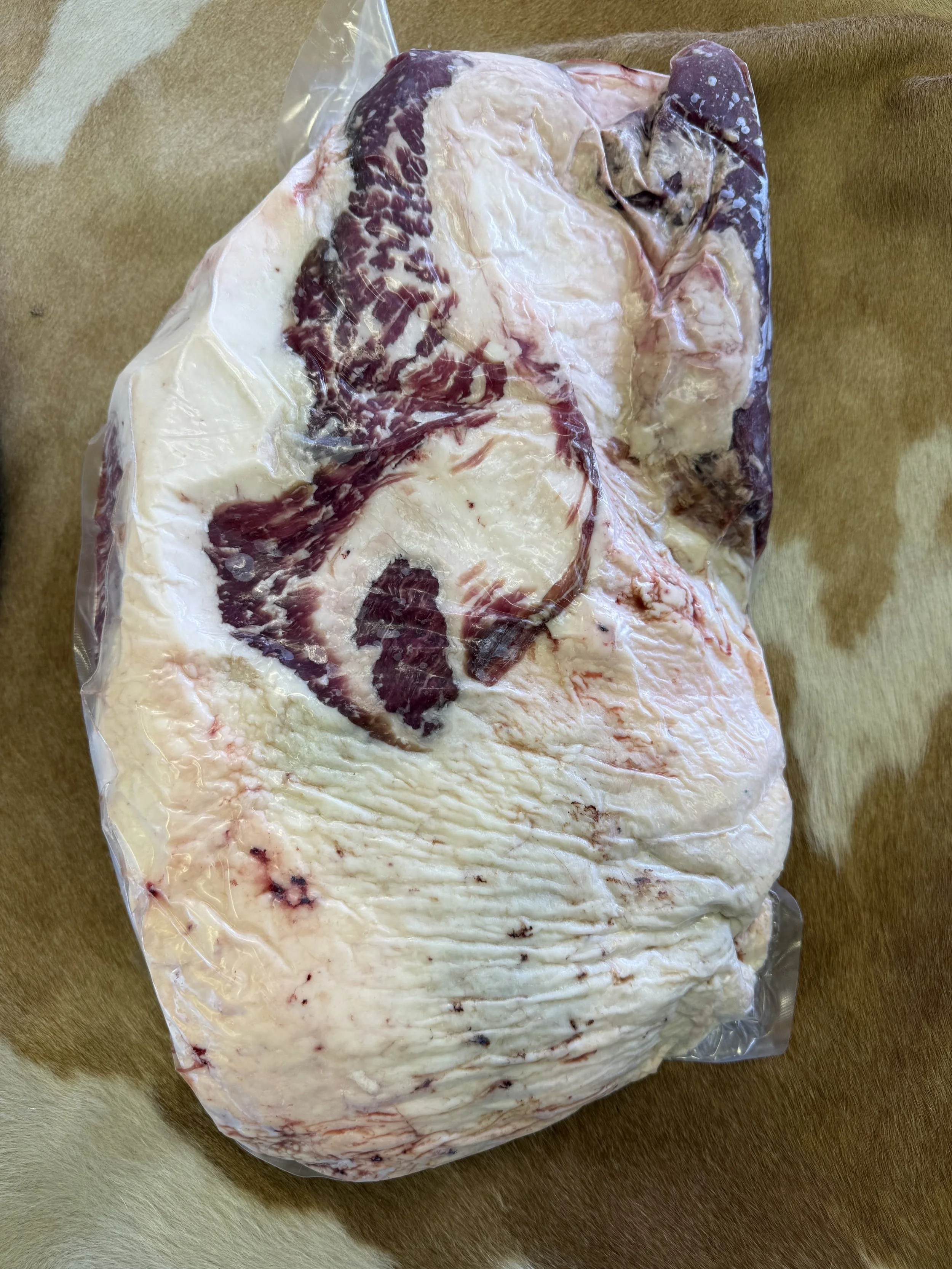 Image 2 of 4
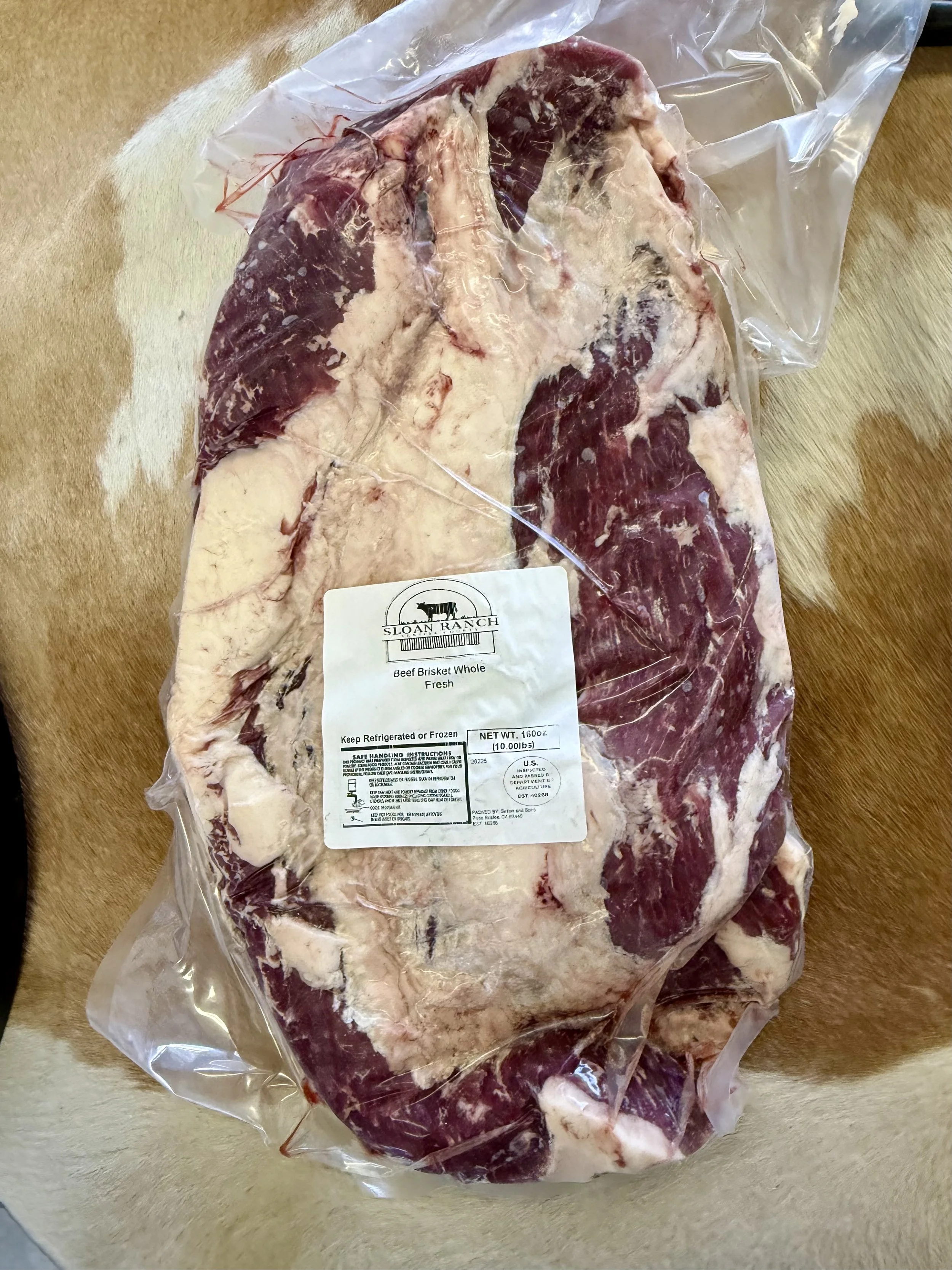 Image 3 of 4
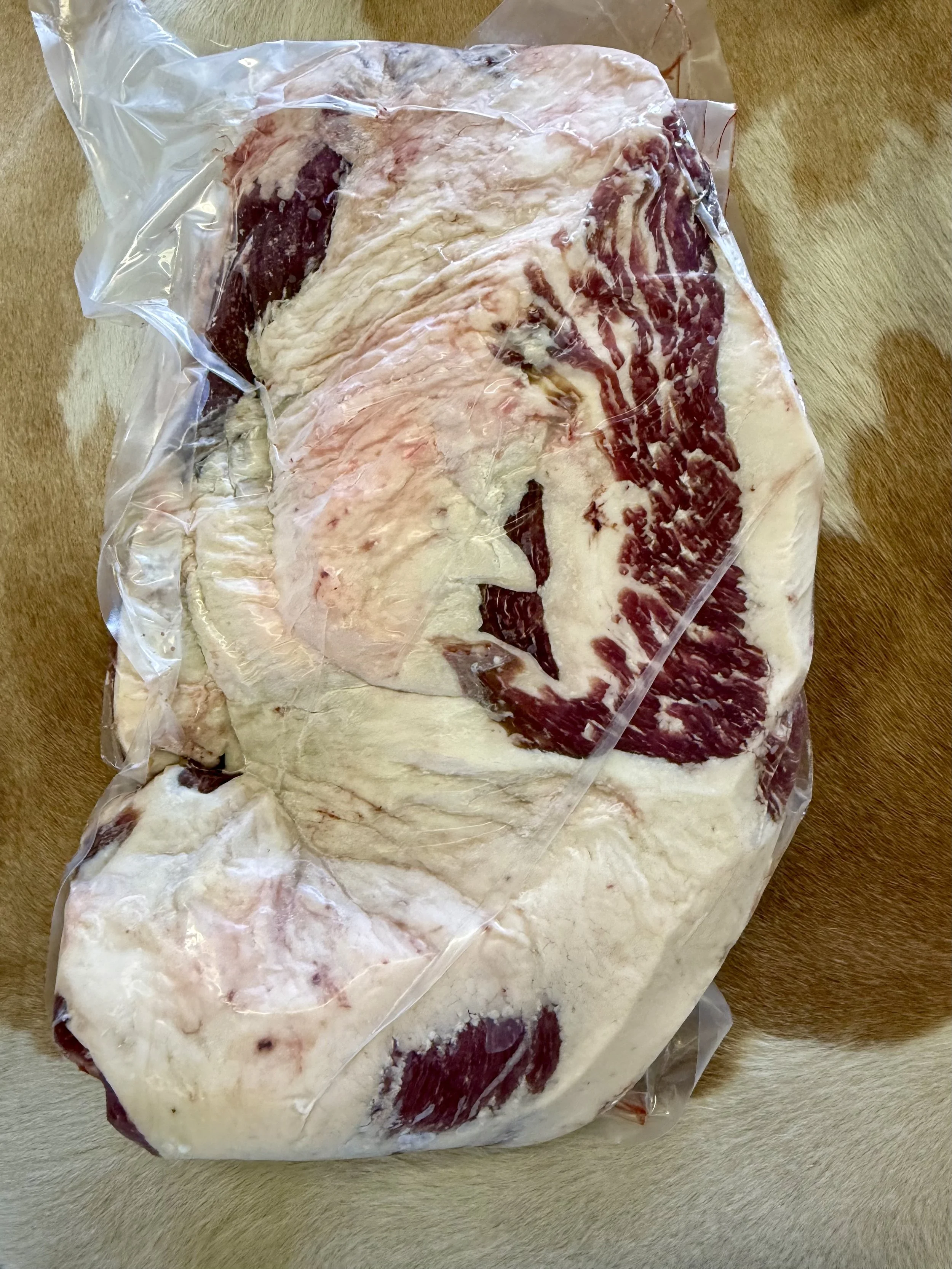 Image 4 of 4
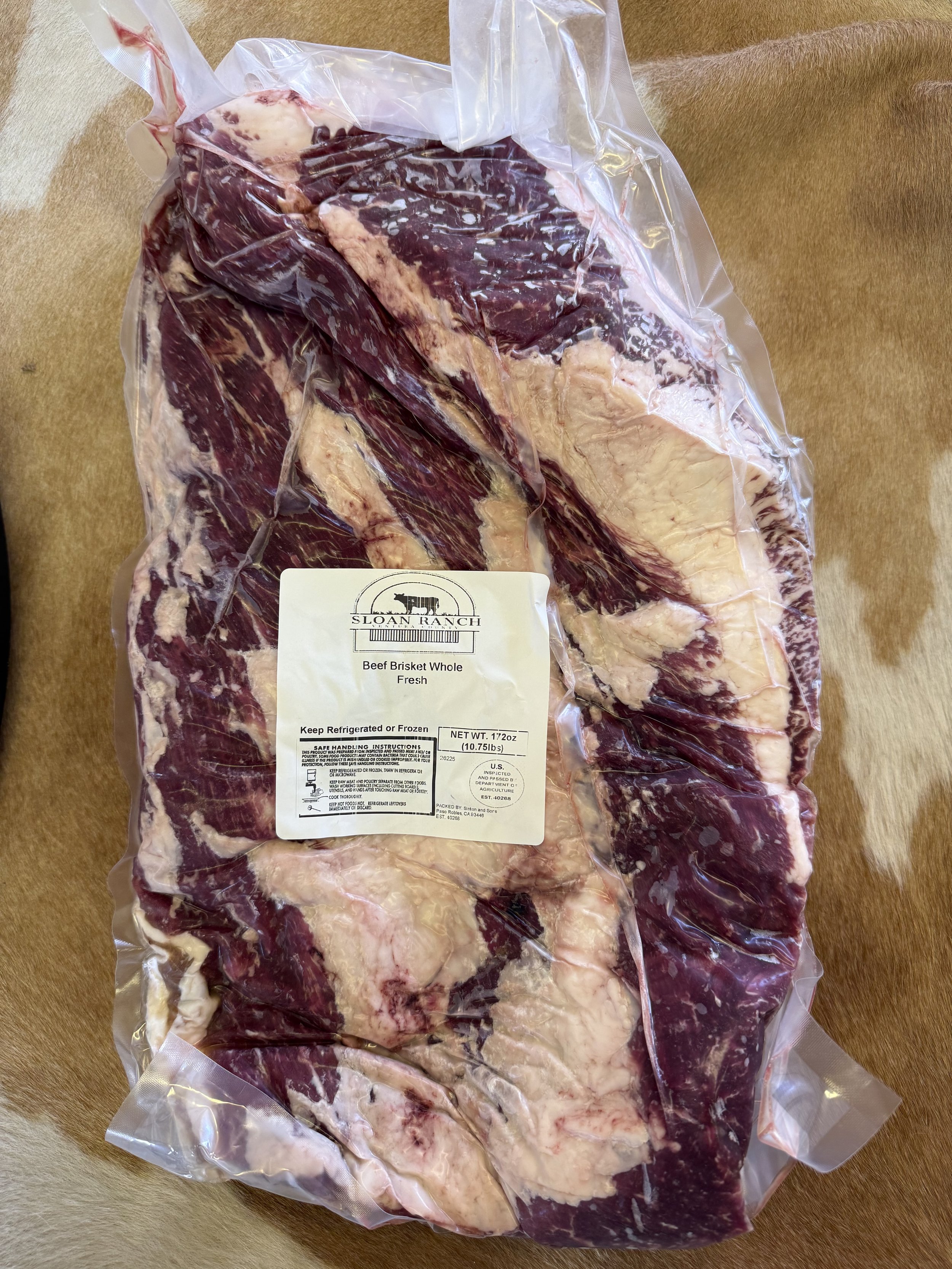
A whole beef brisket is the entire primal cut taken from the lower chest (pectorals) of the cow. It consists of two distinct muscles — the larger, thicker flat (or "first cut") and the smaller, fattier point (or "second cut") — joined by connective tissue and an outer fat layer called the deckle. Because these muscles support much of the animal’s weight, brisket is well-exercised and contains significant collagen and connective tissue, which gives it its characteristic texture and flavor when cooked properly.
Key features
Composition: Two muscles (flat and point) separated by a fat seam; external fat cap (usually trimmed to desired thickness); connective tissue and collagen throughout.
Weight and size: Whole briskets typically weigh between 8 and 20 pounds, depending on the animal and trimming.
Fat content: The point is fattier and more marbled; the flat is leaner and slices more uniformly.
Flavor and texture: Rich, beefy flavor. When cooked low and slow, collagen breaks down into gelatin, producing tender, juicy meat with a silky mouthfeel.
Common preparations and uses
Smoking/Barbecue: Whole brisket is often smoked low and slow (225–275°F) for many hours until the internal temperature reaches about 195–205°F, producing tender slices from the flat and pull-apart texture from the point.
Braising: Slowly cooked in liquid at low heat; useful for pot roast-style preparation where the whole piece can be browned and then cooked until tender.
Corned beef: Brisket cured in a seasoned brine (often with saltpeter historically) and then boiled or braised; the whole cut can be used.
Pastrami: Typically made from the point or whole brisket that is cured, seasoned, smoked, and steamed.
Deli slicing: The flat, when trimmed and cooked properly, yields even slices ideal for sandwiches.
Butchery and trimming
Turning into two pieces: Some cooks separate the flat and point for different uses (e.g., slice the flat for service and chop or shred the point for burnt ends).
Fat cap: Trimmed to a consistent thickness (commonly 1/4 inch) to balance moisture and bark (smoke crust) formation.
Deckle removal: The deckle or fat/often trimmed surface can be partially removed depending on desired yield and cooking method.
Cooking considerations
Low-and-slow heat: Essential to convert collagen to gelatin without drying the meat.
Internal temperature over time: Tenderness depends more on collagen breakdown than a single “safe” target temp; many pitmasters aim for 195–205°F, checking for a probe-tender “feel.”
Resting: Allowing the cooked brisket to rest (often wrapped and kept warm for 30–60 minutes or longer) redistributes juices and firms the meat for slicing.
Slicing: Slice against the grain. Because grain direction can change between flat and point, rotate and adjust slicing direction accordingly.
Whole beef brisket is prized for its deep beef flavor and versatility. Proper trimming and low-and-slow cooking unlock its tender, gelatin-rich texture, making it a staple for barbecue, braised dishes, and classic preparations like corned beef and pastrami.
A whole beef brisket is the entire primal cut taken from the lower chest (pectorals) of the cow. It consists of two distinct muscles — the larger, thicker flat (or "first cut") and the smaller, fattier point (or "second cut") — joined by connective tissue and an outer fat layer called the deckle. Because these muscles support much of the animal’s weight, brisket is well-exercised and contains significant collagen and connective tissue, which gives it its characteristic texture and flavor when cooked properly.
Key features
Composition: Two muscles (flat and point) separated by a fat seam; external fat cap (usually trimmed to desired thickness); connective tissue and collagen throughout.
Weight and size: Whole briskets typically weigh between 8 and 20 pounds, depending on the animal and trimming.
Fat content: The point is fattier and more marbled; the flat is leaner and slices more uniformly.
Flavor and texture: Rich, beefy flavor. When cooked low and slow, collagen breaks down into gelatin, producing tender, juicy meat with a silky mouthfeel.
Common preparations and uses
Smoking/Barbecue: Whole brisket is often smoked low and slow (225–275°F) for many hours until the internal temperature reaches about 195–205°F, producing tender slices from the flat and pull-apart texture from the point.
Braising: Slowly cooked in liquid at low heat; useful for pot roast-style preparation where the whole piece can be browned and then cooked until tender.
Corned beef: Brisket cured in a seasoned brine (often with saltpeter historically) and then boiled or braised; the whole cut can be used.
Pastrami: Typically made from the point or whole brisket that is cured, seasoned, smoked, and steamed.
Deli slicing: The flat, when trimmed and cooked properly, yields even slices ideal for sandwiches.
Butchery and trimming
Turning into two pieces: Some cooks separate the flat and point for different uses (e.g., slice the flat for service and chop or shred the point for burnt ends).
Fat cap: Trimmed to a consistent thickness (commonly 1/4 inch) to balance moisture and bark (smoke crust) formation.
Deckle removal: The deckle or fat/often trimmed surface can be partially removed depending on desired yield and cooking method.
Cooking considerations
Low-and-slow heat: Essential to convert collagen to gelatin without drying the meat.
Internal temperature over time: Tenderness depends more on collagen breakdown than a single “safe” target temp; many pitmasters aim for 195–205°F, checking for a probe-tender “feel.”
Resting: Allowing the cooked brisket to rest (often wrapped and kept warm for 30–60 minutes or longer) redistributes juices and firms the meat for slicing.
Slicing: Slice against the grain. Because grain direction can change between flat and point, rotate and adjust slicing direction accordingly.
Whole beef brisket is prized for its deep beef flavor and versatility. Proper trimming and low-and-slow cooking unlock its tender, gelatin-rich texture, making it a staple for barbecue, braised dishes, and classic preparations like corned beef and pastrami.