
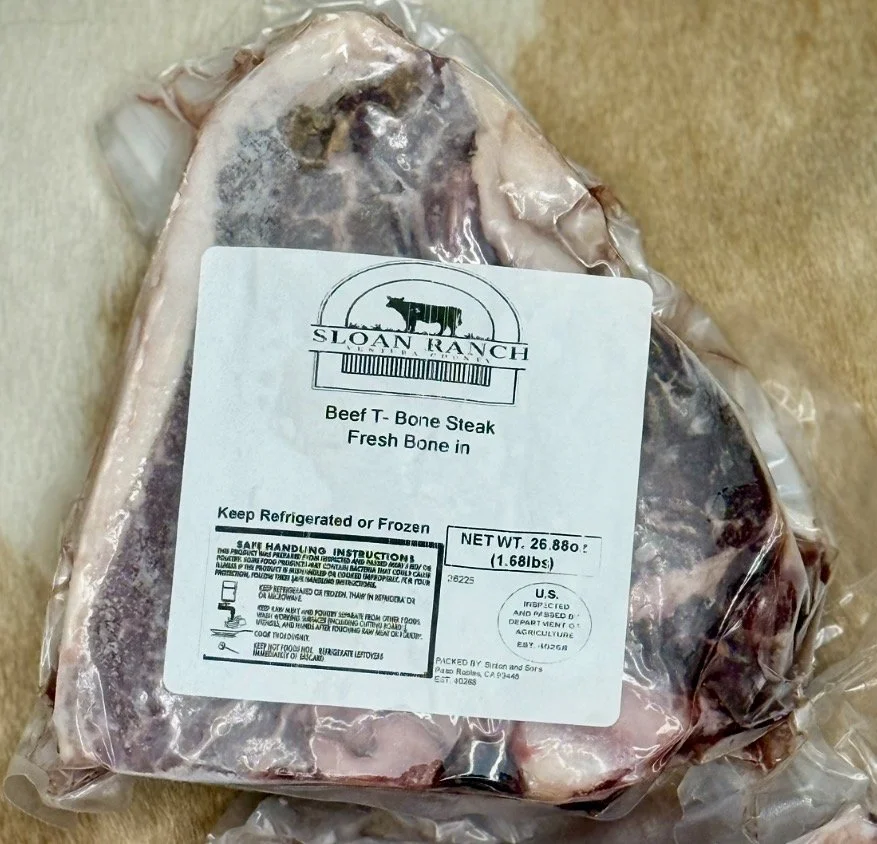
 Image 1 of 3
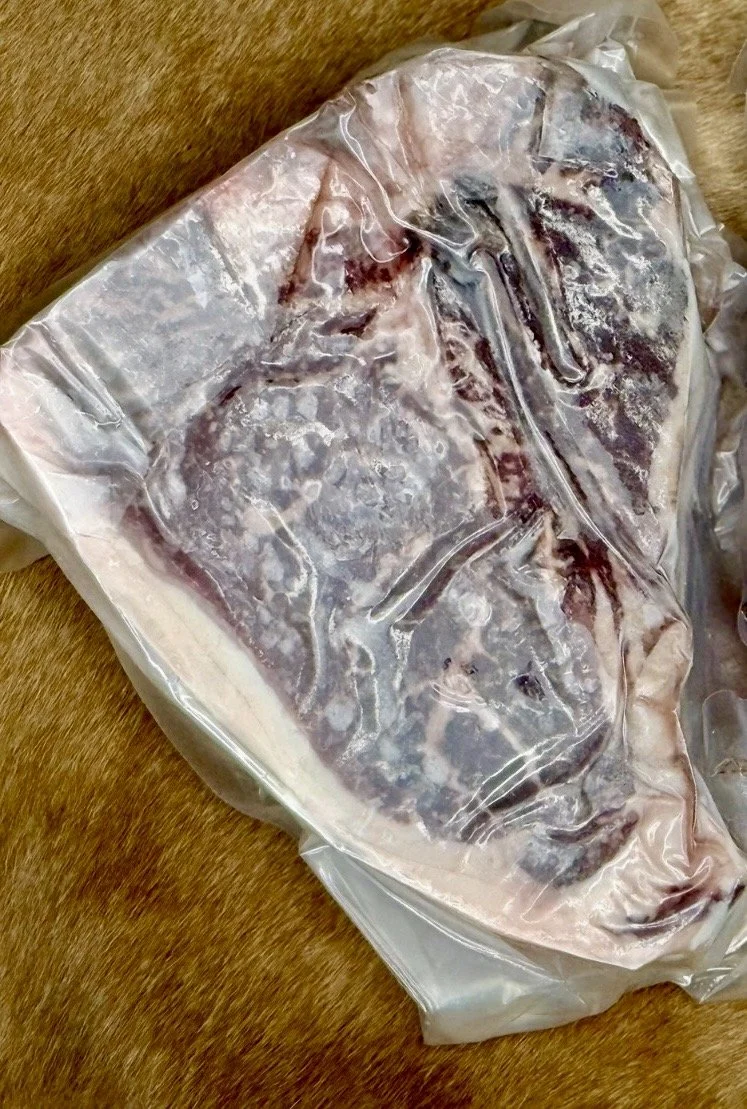 Image 2 of 3
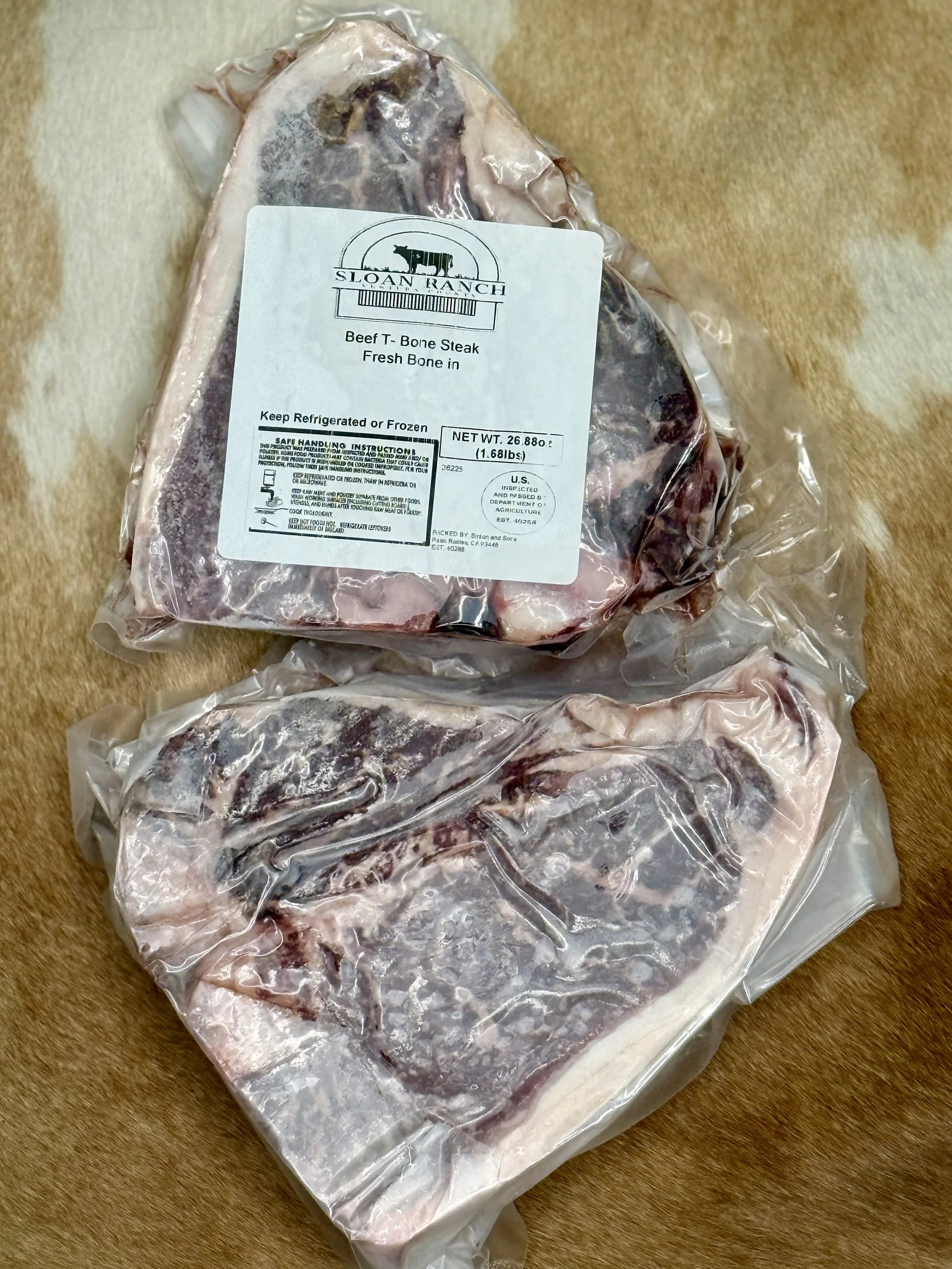 Image 3 of 3
T-Bone Steak
A T-bone steak is a cut of beef from the short loin that features a distinct T-shaped bone with meat on both sides. One side contains a portion of the tenderloin (filet mignon), and the other side contains a portion of the strip loin (New York strip). This combination gives the T-bone both tenderness and robust flavor.
Key characteristics
Appearance: T-shaped bone dividing two muscles; thickness typically ranges from 1 to 2 inches or more.
Texture: The tenderloin side is buttery and very tender; the strip side is firmer with a meatier chew.
Flavor: Rich, beefy flavor from the strip side, with a delicate, mild taste from the tenderloin.
Cooking: Best suited to high-heat methods—grilling, broiling, or pan-searing followed by oven finishing. Because the two muscles cook at slightly different rates, use moderate-to-high heat and let the steak rest after cooking to balance doneness.
Doneness guidance: Aim for medium-rare to medium for best tenderness and flavor; internal temperature around 130–135°F for medium-rare, 135–145°F for medium.
Portion size: Typically served as an individual steak, often 16 oz or larger when bone-in and thick-cut.
Bring to room temperature for 30–45 minutes before cooking for more uniform doneness.
Season simply with salt and pepper to highlight natural beef flavor; add butter or compound butter for finishing if desired.
Serving suggestions
Serve with classic accompaniments such as roasted or mashed potatoes, sautéed vegetables, creamed spinach, or a simple green salad.
Slice against the grain on the strip side and trim portions of the tenderloin carefully to present both textures.
Summary The T-bone combines two distinct textures and flavors in one steak—tenderloin’s softness and the strip’s beefy bite—making it a popular choice for those who want both tenderness and pronounced beef flavor in a single cut.
T-Bone Steak
A T-bone steak is a cut of beef from the short loin that features a distinct T-shaped bone with meat on both sides. One side contains a portion of the tenderloin (filet mignon), and the other side contains a portion of the strip loin (New York strip). This combination gives the T-bone both tenderness and robust flavor.
Key characteristics
Appearance: T-shaped bone dividing two muscles; thickness typically ranges from 1 to 2 inches or more.
Texture: The tenderloin side is buttery and very tender; the strip side is firmer with a meatier chew.
Flavor: Rich, beefy flavor from the strip side, with a delicate, mild taste from the tenderloin.
Cooking: Best suited to high-heat methods—grilling, broiling, or pan-searing followed by oven finishing. Because the two muscles cook at slightly different rates, use moderate-to-high heat and let the steak rest after cooking to balance doneness.
Doneness guidance: Aim for medium-rare to medium for best tenderness and flavor; internal temperature around 130–135°F for medium-rare, 135–145°F for medium.
Portion size: Typically served as an individual steak, often 16 oz or larger when bone-in and thick-cut.
Bring to room temperature for 30–45 minutes before cooking for more uniform doneness.
Season simply with salt and pepper to highlight natural beef flavor; add butter or compound butter for finishing if desired.
Serving suggestions
Serve with classic accompaniments such as roasted or mashed potatoes, sautéed vegetables, creamed spinach, or a simple green salad.
Slice against the grain on the strip side and trim portions of the tenderloin carefully to present both textures.
Summary The T-bone combines two distinct textures and flavors in one steak—tenderloin’s softness and the strip’s beefy bite—making it a popular choice for those who want both tenderness and pronounced beef flavor in a single cut.