
 Image 1 of 2
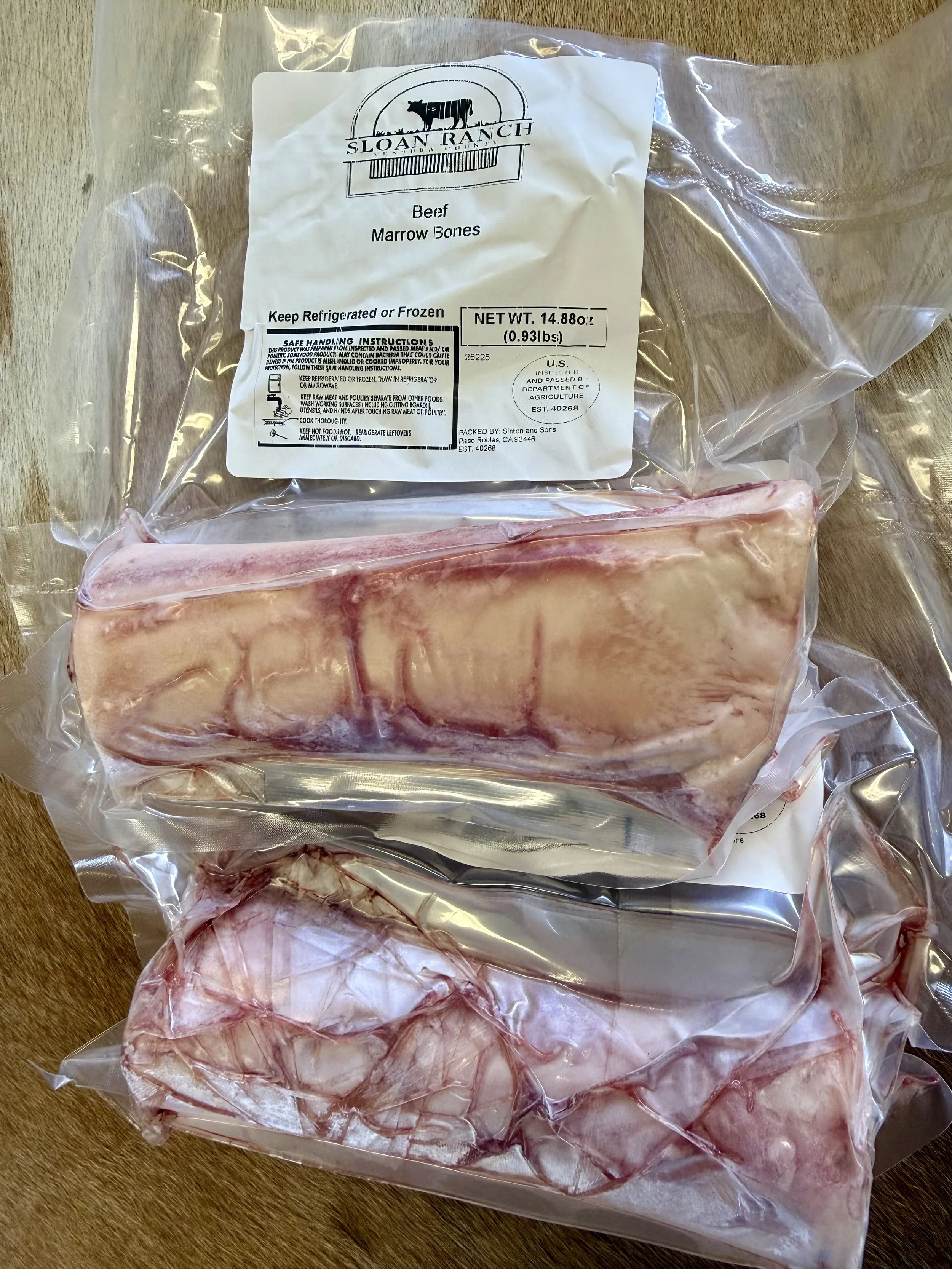 Image 2 of 2
Approximately 1+lb
Marrow bones are large, hollowed sections of beef bone—typically femur or shank—cut to expose the dense, nutrient-rich marrow at their centers. The outer bone is hard and mineralized, providing structure and a natural vessel for the soft, buttery marrow. Marrow itself has a silky texture and a rich, gelatinous mouthfeel with savory, beefy flavors and subtle sweetness, often described as umami-forward and slightly nutty.
Common uses:
Broths and stocks: Long-simmered marrow bones release collagen and marrow into the liquid, creating deeply flavored, silky broths and contributing body and mouthfeel.
Soups and stews: Added to slow-cooked dishes, marrow melts into the cooking liquid, enriching sauces and gravies.
Butters and spreads: Rendered marrow can be combined with herbs, garlic, or citrus to make compound butters or spreads that enhance steaks, vegetables, or bread.
Culinary characteristics:
Texture: Soft, spreadable when cooked; firm and waxy when raw.
Flavor: Intensely savory and fatty with beefy depth; pairs well with acid (lemon, vinegar), herbs (parsley, thyme), and spicy or bitter accompaniments to cut richness.
Cooking notes: Roast at high heat (425–450°F) for about 15–20 minutes until marrow is jiggly but not liquefied. For broths, simmer bones low and slow for 8–24 hours to extract collagen and flavor. Score or trim excess connective tissue to improve presentation.
Nutritional profile: Marrow is calorie-dense and high in fat, including saturated and monounsaturated fats, along with fat-soluble vitamins and minerals. It contributes energy and flavor rather than significant protein. When used in moderation, marrow adds richness and mouthfeel to dishes.