
 Image 1 of 1
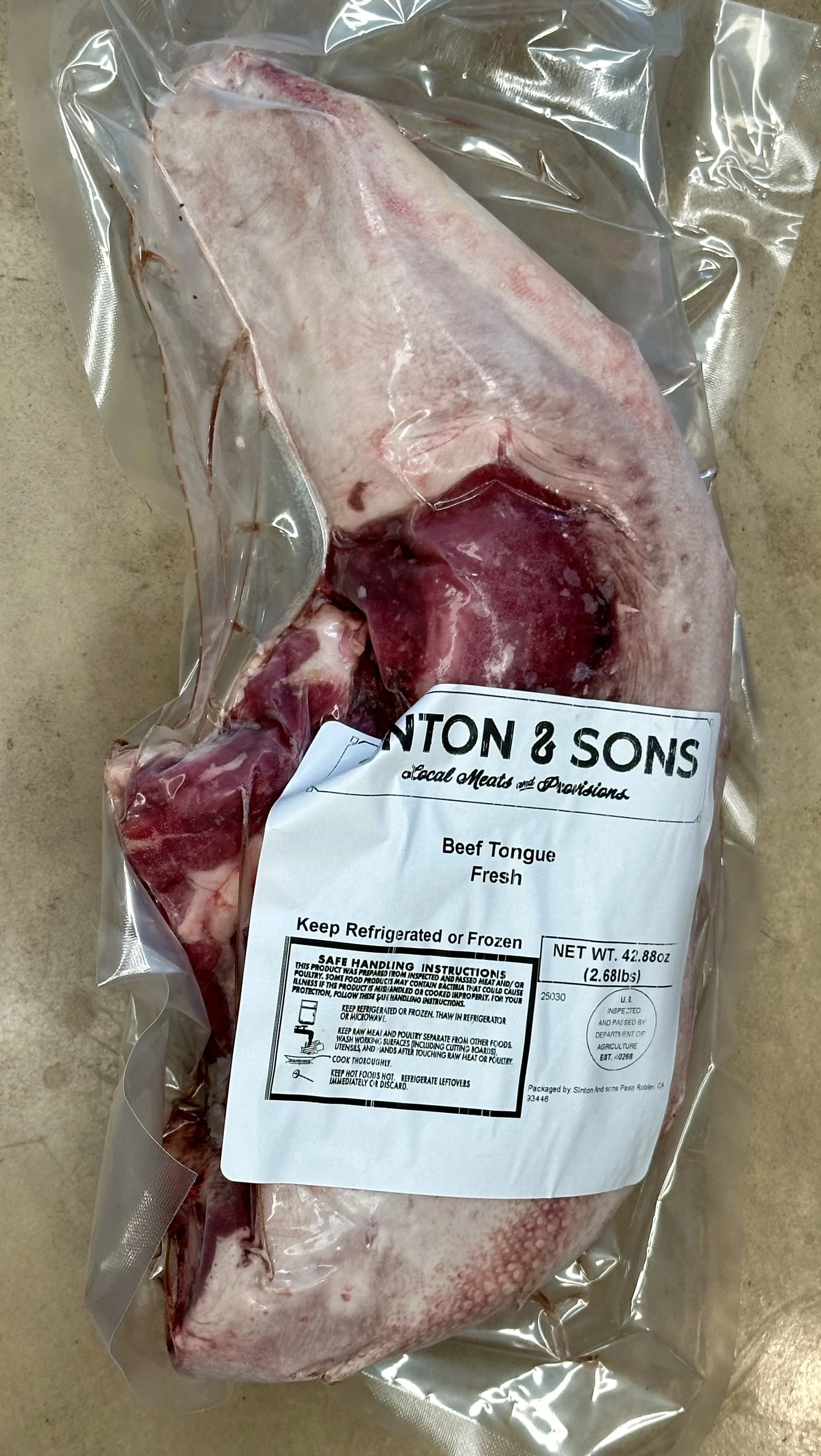
Beef tongue is a tender, richly flavored cut from the muscular organ of cattle. It has a dense, fine-grained texture and a mild, beefy flavor with a slightly sweet, gelatinous note when slow-cooked. The outer surface is covered in a coarse, papillae-rich layer that is removed after cooking; the inner meat is pale pink to light brown and becomes more tender and moist when braised, simmered, roasted, or smoked.
Common preparations include braising in broth or aromatic liquids, simmering whole for slicing, slow-roasting, and smoking. It is often seasoned with salt, pepper, garlic, and herbs or served with sauces such as chimichurri, salsa verde, mustard-based dressings, or classic pickling brine. In many cuisines, thinly sliced beef tongue is used for tacos, sandwiches, deli-style platters, or plated as a main with root vegetables.
Nutritionally, beef tongue is calorie-dense and high in fat compared with many other lean cuts, while also providing a good source of protein, B vitamins (especially B12), iron, zinc, and other trace minerals. Because of its higher fat content, it remains moist and flavorful through long, slow cooking methods.
Approximately 2.5lbs+