
 Image 1 of 1
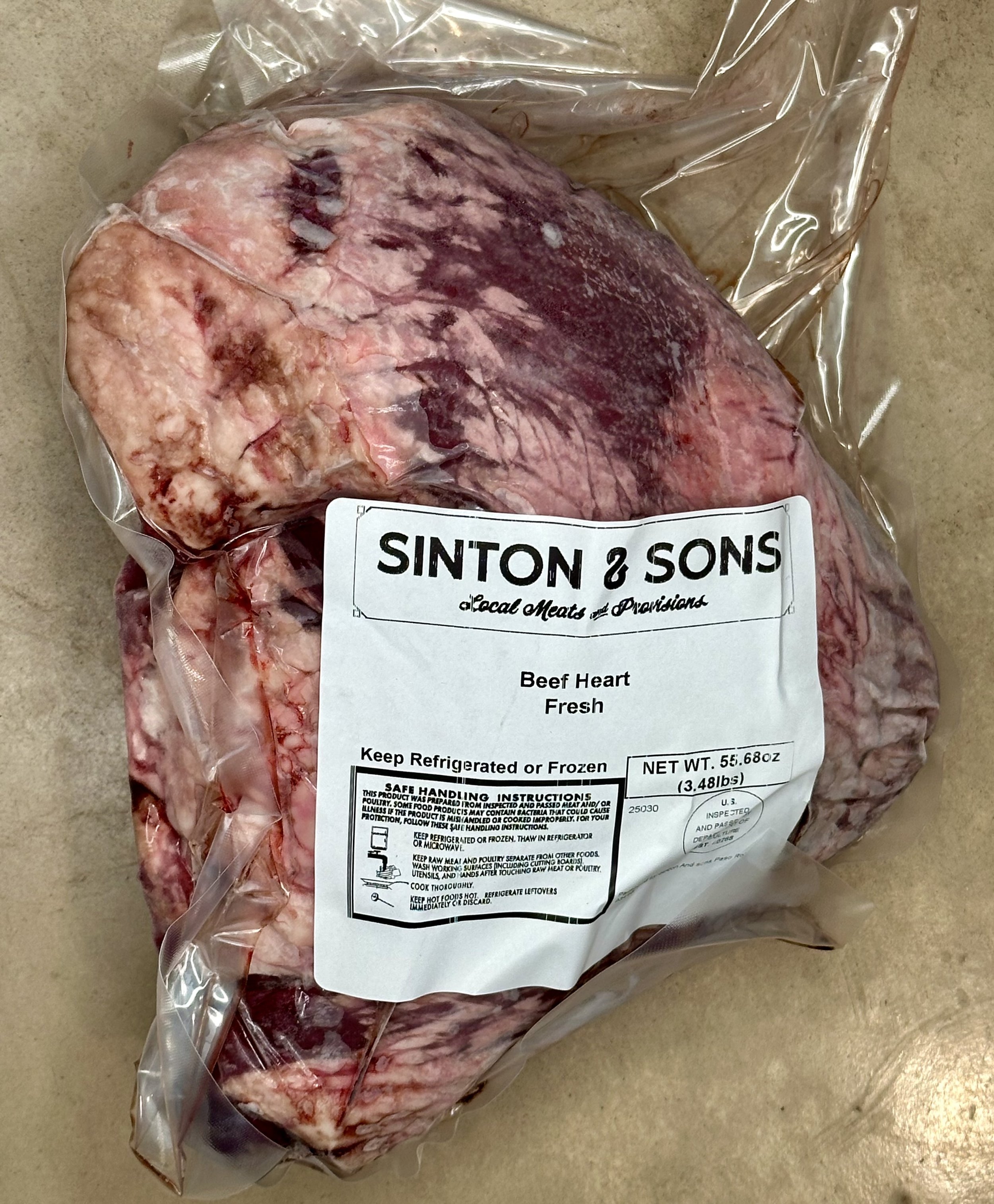
Beef Heart is nutritious, flavorful and surprisingly lean and inexpensive. It is a favorite to use in pet food or dehydrate for pet treats!!
Approximately 3lbs
Beef heart is a large, dense muscle from the bovine chest cavity that serves as the organ pumping blood through the animal. It has a firm texture, fine muscle grain, and a concentrated, beef-forward flavor that’s richer and slightly sweeter than typical skeletal cuts. Because it is used continuously, the muscle fibers are well-developed, resulting in a lean cut with low intramuscular fat and a relatively high protein content per ounce.
Appearance and composition
Size and shape: Usually weighs 2–5 pounds, roughly conical with a pointed apex and broader base. Exterior has a smooth, firm surface and a thick outer membrane (pericardium) that is trimmed before cooking.
Color: Deep red to dark crimson when raw; cooks to a deeper brown while remaining moist if handled properly.
Fat and connective tissue: Relatively lean overall. Contains some external fat and connective tissue near the base and valves; these are typically removed during butchering or preparation.
Nutritional profile: High in protein, rich in iron, zinc, B vitamins (especially B12 and riboflavin), and coenzyme Q10. Lower in calories and total fat than many conventional muscle cuts.
Culinary uses and cooking methods
Texture: Dense and meaty, but not tough when cut and cooked correctly. Slices across the grain are tender and pleasant; small-diameter muscle bundles respond well to quick, high-heat methods or brief roasting.
Common preparations: Grilled or pan-seared slices, skewered and broiled, slow-braised, or ground and mixed into burgers and sausages. Also suitable for stews or long, gentle cooking to break down tougher connective areas.
Preparation tips: Trim away visible fatty deposits and any fibrous valves or connective tissue. Slice against the grain for the most tender results. Because it’s lean, avoid overcooking; medium-rare to medium (for whole slices) preserves moisture and tenderness. Marinating can add flavor and tenderness.
Flavor pairings: Robust herbs (rosemary, thyme), garlic, citrus, vinegar-based marinades, bold mustards, and compound butters complement the heart’s concentrated beef flavor. Sauces with acidity or umami elements balance the richness.
Sustainability and value
Economical and resource-efficient: Using beef heart makes fuller use of the animal and is often priced lower per pound than prime steaks while offering high nutritional value. It’s considered a sustainable choice for reducing waste and increasing value from each carcass.
Overall, beef heart is a versatile, nutrient-dense cut with a robust beef flavor, best prepared with attention to trimming, slicing against the grain, and cooking methods that preserve moisture.
Beef Heart is nutritious, flavorful and surprisingly lean and inexpensive. It is a favorite to use in pet food or dehydrate for pet treats!!